Beyond the Highlights: The Grit, Heart, and Humanity of Chuck Muncie
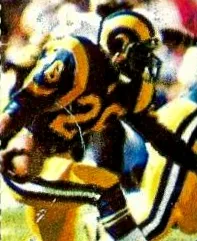
Photo: Pittsburgh Steelers/Globe Ticket Co., Public domain, via Wikimedia Commons
There's a version of Chuck Muncie's story that gets told in box scores and highlight reels. It's a good story — a powerful fullback-sized running back with the speed of a wide receiver, a guy who could make an entire defense look foolish on a Sunday afternoon. But that version leaves out the most important chapters.
Here at Chuck Muncie Forever, we've always believed that the whole story matters. The stumbles. The comebacks. The quiet moments of grace that never made SportsCenter. Because when you look at everything Chuck went through, the fact that he became an NFL icon isn't just impressive — it's borderline miraculous.
A Kid From Farrell, Pennsylvania
Chuck Muncie grew up in Farrell, Pennsylvania, a small industrial town near the Ohio border that has punched well above its weight in producing athletic talent over the decades. It wasn't an easy place to grow up, and Muncie's early years weren't cushioned by privilege or comfort. What he had was raw ability and a relentless competitive drive that coaches at every level noticed immediately.
He took that drive to the University of California, Berkeley, where he became one of the most dominant college running backs of his era. At Cal, Muncie wasn't just good — he was the kind of player that made opposing defensive coordinators lose sleep. His combination of size, vision, and explosiveness was genuinely rare, and it translated directly to the NFL stage when the New Orleans Saints selected him in the first round of the 1976 NFL Draft.
But here's the thing about raw talent: it doesn't protect you from the harder parts of life.
The Weight He Carried
It would be dishonest to write about Chuck Muncie without acknowledging the substance abuse struggles that shadowed much of his career. By the early 1980s, those issues had become public knowledge, and they ultimately contributed to his suspension from the NFL in 1984. The league had a different approach to player wellness back then — punishment was the default response, support systems were sparse, and the culture around mental health and addiction was nowhere near where it is today.
What often gets lost in that narrative, though, is just how hard Muncie played through those years. The 1981 season with the San Diego Chargers, for instance, was nothing short of spectacular. He rushed for over 1,100 yards and scored 19 touchdowns — a record-breaking performance that placed him among the elite backs in the entire NFL that season. He did that while carrying burdens that most people never have to face publicly.
That's not an excuse for the choices that were made. It's context. And context matters when you're trying to understand a person rather than just judge them.
The Teammates Who Saw Something Different
Spend any time reading interviews with former Chargers and Saints players from that era, and a different picture of Muncie starts to emerge. Teammates consistently describe a guy who was generous in the locker room, genuinely funny, and deeply committed to winning. He wasn't a selfish player. He blocked when he needed to, picked up blitz pickups that saved quarterbacks from serious hits, and celebrated his teammates' successes with authentic enthusiasm.
Dan Fouts, the Hall of Fame quarterback who lined up behind center during Muncie's best years in San Diego, has spoken warmly about what Muncie brought to that Air Coryell offense. In a system built on creativity and trust, Muncie was a weapon that defensive coordinators simply couldn't account for with a single scheme. You had to respect his power. You had to respect his speed. And then you had to figure out how to stop Wes Chandler and Charlie Joiner at the same time. Good luck with that.
Life After Football
After his playing days ended, Muncie faced the kind of transition that derails a lot of former athletes. The structure of professional sports disappears overnight, and the identity you've built around being the guy on Sundays doesn't just smoothly convert into civilian life. For Muncie, those years were genuinely difficult.
But here's what we find remarkable: he kept going. He sought help. He talked openly about his struggles in ways that took real courage, especially for a man of his generation who grew up in an era where vulnerability wasn't exactly celebrated in athletic culture. In doing so, he became something more than a football player. He became a cautionary tale told with honesty, and eventually, a story of perseverance.
In later years, Muncie engaged with fans and former teammates at alumni events and charity functions, always carrying himself with a warmth and humility that left an impression on everyone who met him. He passed away in April 2013, but the people who knew him — really knew him — speak about him the way you talk about someone who genuinely mattered.
Why His Legacy Endures
Chuck Muncie never made the Pro Football Hall of Fame. That's a conversation worth having, honestly, and one we'll revisit on this site more than once. But his legacy doesn't live or die by Canton's decisions. It lives in the memories of fans who watched him turn nothing into something on a broken play. It lives in the stories his former teammates still tell. And it lives in the way his story — complicated, painful, triumphant in its own uneven way — reflects something true about the human experience.
We root for athletes because we see ourselves in them. Not the superhuman version, but the version that gets knocked down and has to decide whether to get back up. Chuck Muncie got knocked down more than most. And more often than not, he got back up.
That's the story we're here to keep telling.
Welcome to Chuck Muncie Forever — where we celebrate the whole legend, not just the easy parts.