Boom Boxes, Funk, and First Downs: The Locker Room Playlist That Powered the Early '80s Chargers
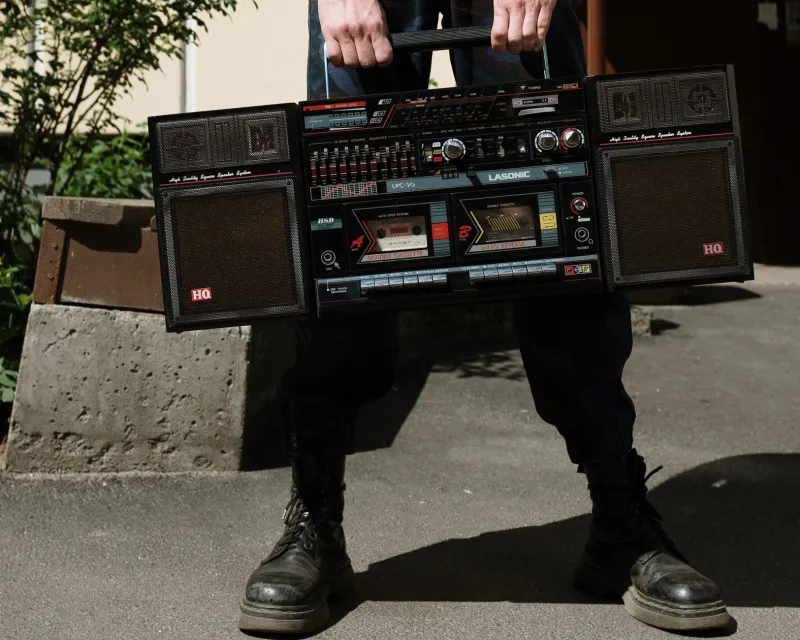
Picture it: it's a Sunday afternoon in San Diego, 1981. The Chargers have just gutted out a division win, and the locker room at Jack Murphy Stadium is a wall of steam, tape, and laughter. Somewhere in the corner, a boom box the size of a suitcase is rattling the metal lockers. And in the middle of it all, helmet off, headband on, is Chuck Muncie — soaking in the moment like everyone else.
We spend a lot of time on this site talking about Muncie's stats, his stiff-arm, his comeback story. But today we're turning the dial a different way. What was playing in that locker room? What did that era sound like?
The Golden Age of the Locker Room Boom Box
If you're under 40, you need to understand something: there was no shared playlist in 1981. There was one radio, usually owned by whichever player had the loudest taste, and everyone lived with it. Somebody's R&B station, somebody's funk record, and if the veteran running backs weren't feeling it, the station was changing.
The early '80s were a sweet spot for that. Funk was still king — Earth, Wind & Fire, Kool & the Gang, the Gap Band — but the landscape was shifting. Sugarhill Gang's "Rapper's Delight" had cracked the door open for hip-hop a couple of years earlier, and you can bet it found its way onto locker room radios. Disco was dead in the mainstream but alive in the locker room. Motown classics never left. This was a transition era in American music, and NFL locker rooms were right at the fault line.
San Diego in the Early '80s: More Than Sunshine
The Chargers of that era weren't just a football team — they were a product of their city. San Diego in 1980 and '81 had a laid-back, beach-town confidence that bled into the roster. This wasn't the grim, gray AFC North. This was a team with a high-f passing offense, sunshine, and a fanbase that showed up in beachwear.
The music reflected it. The national charts were dominated by the likes of Fleetwood Mac, Kenny Loggins (a Southern California guy through and through), and the smooth West Coast sound of acts like the Doobie Brothers and Toto. Meanwhile, the funk and soul that dominated Black NFL locker rooms — and the Chargers' roster had plenty of stars from that tradition — came from acts like Zapp, Rose Royce, and the Ohio Players.
That blend — smooth California rock on one radio dial, heavy funk on the other — is exactly the sound of that team. Easygoing on the surface, absolutely punishing underneath.
The Headband, the High-Steps, and the Hollywood of It All
Here's what makes the Muncie era so perfect for this kind of nostalgia trip: the guy looked like the era. The headband. The high-step touchdown run. The charisma. He was the kind of player who belonged on the cover of a Sports Illustrated that sat on a coffee table next to a copy of Rolling Stone.
And that's part of why the retro-sports revival has embraced him. Today's fans discovered that era through grainy YouTube highlights and shows like ESPN's 30 for 30 documentaries, and what they found was a league that felt alive in a different way. The uniforms were better. The celebrations were looser. The music, frankly, was incredible.
There's a reason throwback jerseys from that era sell like crazy, and why NFL teams keep dusting off their '80s alternate uniforms. We're nostalgic for a time when the league felt a little less corporate and a little more like a party that happened to have a football game attached.
The Rituals Beyond the Radio
Music was only part of the pregame ritual. Guys in that era had their routines — specific taping orders, card games on the plane, superstitious meals. The locker room was a social club, a comedy club, and a chapel all at once. Veterans set the tone. Rookies carried the bags and kept their mouths shut.
You can imagine the scene: a rookie fumbling with the radio controls, a veteran giving him the look, Muncie — by then a team leader — stepping in with that easy smile. Every locker room has its DJs, its comedians, its quiet enforcers. The '80s Chargers were no different. They just did it with better hair and worse sunglasses.
Why We're Still Chasing That Sound
There's a whole generation of fans now who watch highlights from 1981 and feel something they can't quite name. Part of it is the football — Muncie's running style holds up better than almost anyone's from that era. But part of it is the vibe. The film grain. The crowd noise. The sense that you're watching something that happened in a world that moved slower and meant it more.
The music of that time is having its own renaissance for the same reason. Funk and early hip-hop samples are everywhere in modern production. That boom box in the corner of the Chargers' locker room? Its grandchildren are in every NFL facility in America today, just smaller and wireless.
Chuck Muncie's era gave us great football. It also gave us a feeling — sunny, soulful, a little scruffy around the edges — that we keep trying to bottle. Some days, the best way to remember him isn't through a stat sheet. It's through a pair of headphones, a funk playlist, and a little imagination.
Turn it up. The big fella would've approved.