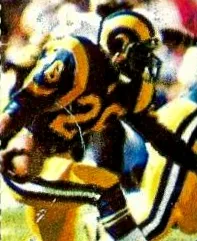
Running Back Royalty: How Chuck Muncie Rewrote the Position's Playbook in the Early 1980s
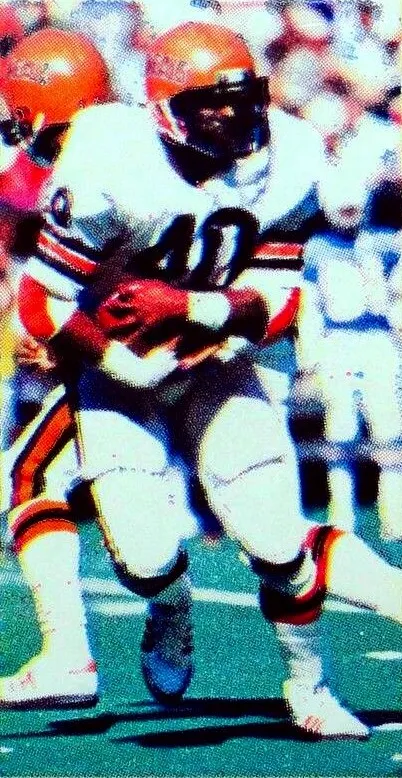
Photo: Pittsburgh Steelers/Globe Ticket Co., Public domain, via Wikimedia Commons
There's a particular kind of football player who comes along and makes you rethink everything. Not just the coaches on the sideline or the scouts in the press box — everybody. The fans, the announcers, the guys playing pickup ball on Sunday mornings. Chuck Muncie was that kind of player, and the early 1980s were his moment to prove it.
When Muncie arrived in San Diego after his trade from New Orleans, he didn't just bring his legs and his hands. He brought an entirely new idea of what a running back could be. And he wasn't alone. The class of talent cycling through the NFL at that time represented a genuine inflection point — a before-and-after moment for the position that still echoes in how teams draft, develop, and deploy backs today.
The Landscape Before Muncie Changed It
To appreciate what Muncie and his contemporaries did, you have to understand what the running back position looked like heading into the late 1970s and early 1980s. Teams largely sorted their backs into two categories: bruising power runners who punished linebackers between the tackles, and lighter, shiftier backs who worked best in space. The idea that one player could do both — and then line up as a legitimate receiving threat on top of it — was still considered a kind of luxury, not a baseline expectation.
Coaches designed their offenses around what their backs couldn't do as much as what they could. If you had a power back, you built your passing game around your tight end and receivers. If you had a speed back, you schemed to get him to the edges. Versatility was nice, but it wasn't the standard.
Then came Muncie.
A Physical Profile That Didn't Fit the Mold
At 6-foot-3 and over 220 pounds, Muncie looked more like a linebacker than the nimble backs most coordinators were used to working with. But he moved like someone who weighed 40 pounds less. His combination of size, speed, and soft hands was genuinely unusual for the era, and it created matchup problems that defenses simply weren't built to handle.
In New Orleans, flashes of that potential were visible even when the team around him was struggling. But it was in San Diego, running behind a strong offensive line and operating within Don Coryell's Air Coryell system, that Muncie became something close to unstoppable. Coryell's offense was already ahead of its time — fast, spread out, and willing to throw the ball all over the field. Plugging Muncie into that system was like putting the right key in a lock.
Suddenly, opposing defenses couldn't just load the box to stop the run. Muncie could catch passes out of the backfield with the reliability of a slot receiver. He could line up wide on certain packages. He could absorb a linebacker's hit on a short gain and still drag the guy another three yards. He was, in the truest sense, a complete back.
The Competition That Raised the Bar
What made the early 1980s so fascinating for the running back position was that Muncie wasn't the only one pushing boundaries. The NFL was flush with remarkable talent at the position, and each of those players brought something slightly different to the table. That healthy competition — on the field and in the film rooms of front offices across the league — forced everyone to evolve.
Scouts who had spent years filling out evaluation forms with simple checkboxes started asking harder questions. Could this prospect catch? Could he pick up a blitz? Could he handle a full workload without breaking down? The bar kept rising, and it rose partly because players like Muncie kept clearing it.
The ripple effect wasn't immediate, but it was real. By the mid-1980s, the prototype for an NFL feature back had quietly but unmistakably shifted. Teams were hunting for the next complete back, the next guy who could threaten a defense in multiple ways simultaneously.
What Scouts Still Borrow From the Muncie Blueprint
Talk to any serious NFL draft analyst today about what makes an elite running back prospect, and you'll hear a checklist that would have sounded almost aspirational in 1975. Route running out of the backfield. Hands. Vision. The ability to make a defender miss in a phone booth but also run through an arm tackle in the open field. Durability. Football IQ.
That checklist didn't materialize out of thin air. It was built, piece by piece, from watching players like Chuck Muncie demonstrate that all of those things could coexist in one person. Every time Muncie caught a screen pass and turned it into a 15-yard gain, he was writing another line in a scouting manual that wouldn't be officially published for another decade.
The modern NFL running back — the kind of back who's expected to be a genuine weapon in the passing game, not just a check-down option — owes a real debt to what Muncie and his generation proved was possible.
Why This Chapter of Football History Deserves More Attention
Here at Chuck Muncie Forever, we spend a lot of time thinking about why certain players and certain eras get overlooked in the broader conversation about football history. The early 1980s running back revolution is one of those stories that tends to get crowded out by flashier narratives — the quarterback revolution, the rise of the West Coast offense, the changing rules around passing.
But the transformation of the running back position was just as significant, and Chuck Muncie was right at the center of it. He wasn't just a great player. He was a proof of concept. He showed what was possible when you stopped limiting a back by position conventions and just let him play football.
The next time you watch a modern NFL offense deploy their running back as a genuine receiving weapon — which is basically every Sunday now — think about where that idea came from. Think about a big man with soft hands running routes in San Diego, making linebackers look slow and safeties look lost.
Think about Chuck Muncie, rewriting the blueprint one carry at a time.