More Than a Jersey Number: Chuck Muncie's Lasting Footprint in the Communities That Cheered Him On
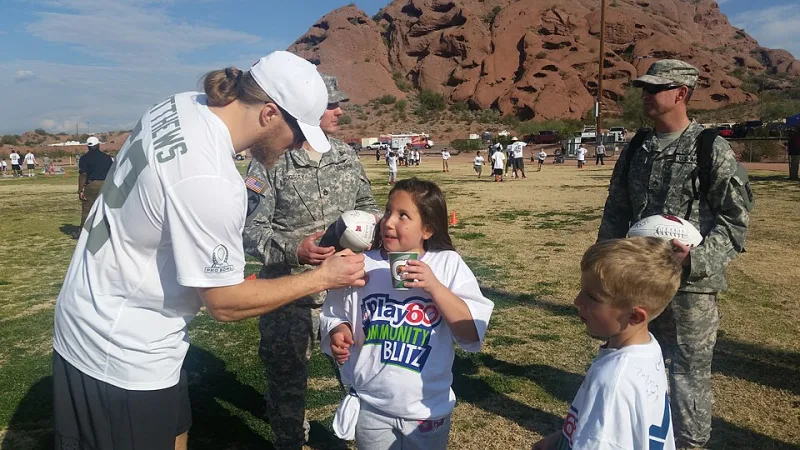
Photo: Sgt. Crystal Reidy, Public domain, via Wikimedia Commons
When most people think about what makes a football player legendary, they go straight to the tape. The highlight runs. The touchdowns. The moments that end up on loop during anniversary tributes. And look — Chuck Muncie has more than enough of those to fill a very long reel.
But here at Chuck Muncie Forever, we've always believed that the full measure of a person extends well beyond what happened between the hash marks. And when you start looking at Chuck's life off the field, what you find is a man who was just as intentional about his impact on communities as he was about finding the hole in a defensive line.
A Player Who Actually Showed Up
Here's something that gets lost in the noise of professional sports: the difference between an athlete who does charity work because it's expected and one who genuinely connects with the people around him. Plenty of players check the community-service box. Far fewer actually build relationships that outlast their playing careers.
By all accounts, Chuck Muncie was firmly in the second category. Whether he was in New Orleans, San Diego, or anywhere else his career took him, he had a way of engaging with fans and community members that felt real. Not transactional. Not staged for a press release. Just a guy who understood that the communities supporting him deserved something back.
That instinct — to give back authentically — is rarer than it sounds in the high-pressure world of professional football, where demands on a player's time are relentless and the temptation to stay insulated is understandable.
Youth Programs and the Next Generation
One of the most consistent threads running through Chuck's community involvement was his commitment to young people. Football was the vehicle, but the destination was always bigger than the sport itself. Youth programs that Muncie touched weren't just about teaching kids to run routes or read defenses — they were about instilling the kind of discipline, work ethic, and self-belief that translates into every corner of life.
For kids growing up in the cities where Chuck played, seeing an NFL star take a genuine interest in their development was meaningful in ways that are hard to quantify. When someone who has achieved at the highest level tells a young person that they have potential, it lands differently than a motivational poster on a gym wall. It's specific. It's personal. And it sticks.
The ripple effect of that kind of mentorship is something you can't really measure in stats, but it's real. Some of those kids grew up to become coaches themselves. Others carried the lessons into completely different fields. That's how genuine community investment works — it compounds over time in ways the original investor never fully gets to see.
The Cities That Claimed Him
What's particularly striking about Chuck's off-field legacy is how it spread across multiple cities rather than concentrating in one place. That's not as common as you might think. Athletes often put down roots in one community — usually wherever they spent the bulk of their career — and that becomes their philanthropic home base.
Muncie's story is different. New Orleans and San Diego both have genuine claims on his legacy, and in both places, you can find people who remember him not just as a football player but as a presence in their community. A guy who came to events. Who remembered names. Who followed up.
That kind of geographic spread of goodwill is a testament to the consistency of his character. He wasn't performing generosity for one audience — it was just how he moved through the world.
Mentoring Athletes Beyond the Game
As his playing career wound down and eventually concluded, Muncie's role shifted from participant to mentor in a way that felt natural rather than forced. He had knowledge — about the game, yes, but also about navigating the pressures that come with athletic success, the physical and mental demands of professional sports, and the challenge of building an identity that isn't entirely dependent on what you can do on a football field.
That last piece is something a lot of former athletes struggle with, and it's an area where Chuck's guidance carried particular weight. He'd been through the highs and the hard stretches. He understood that the transition out of professional sports can be disorienting, and he made himself available to younger athletes who were working through that process.
The willingness to be honest about difficulty — to not just sell the highlight-reel version of an athletic career — is what makes a mentor genuinely useful. And from everything we know about Chuck Muncie, he was the kind of mentor who told the truth.
Why This Part of the Story Matters
We started this site because we believe Chuck Muncie deserves to be remembered in full — not as a footnote or a cautionary tale, but as the complex, talented, deeply human figure he actually was. And part of honoring that complexity means telling the parts of the story that don't fit neatly into a sports highlight package.
His community work isn't a sidebar to his football legacy. It's an extension of the same qualities that made him exceptional on the field — the commitment, the awareness, the genuine care for the people around him. When you look at Chuck Muncie through that wider lens, the picture that emerges is of someone whose impact on American sports culture runs a lot deeper than his rushing totals suggest.
Fans who cheered for him on Sundays in the Superdome or at Jack Murphy Stadium were cheering for someone who, it turns out, was cheering for them right back. That's not something every athlete can say. It's something worth celebrating — loudly, and for as long as we have this platform to do it.
Chuck Muncie Forever isn't just a name. It's a commitment to making sure that all of who he was stays part of the conversation.