The Quiet Coach: How Chuck Muncie Shaped Running Backs Long After the Final Whistle
Photo: Bobak Ha'Eri, CC BY 3.0, via Wikimedia Commons
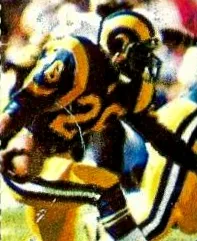
When most people think about Chuck Muncie, they picture those explosive cuts through the line, that freight-train power combined with deceptive speed that made him one of the most dangerous backs in the league during his prime. And honestly, that's fair — the highlight tape earns every replay it gets. But here at Chuck Muncie Forever, we've always believed the full picture of this man runs a lot deeper than any box score or end-zone celebration ever captured.
Because here's the thing: while the cameras were pointed at the scoreboard, Chuck Muncie was doing something quietly remarkable in the background. He was teaching.
More Than a Teammate
Anyone who spent time around Muncie during his years with the Saints and Chargers will tell you the same thing — the guy was a student of the game in a way that went beyond what most players of his era were expected to be. This was the late '70s and early '80s, a time when the idea of players sitting down together to dissect film was nowhere near the organized science it is today. Coaching staffs ran the film rooms. Players showed up, listened, and went to practice.
Muncie didn't operate that way.
Former teammates have recalled how he would linger after official film sessions, rewinding plays not just to find his own mistakes but to understand defensive tendencies at a structural level. He'd notice how a linebacker's foot angle telegraphed his assignment. He'd track safety rotations across multiple plays to identify patterns the coaching staff hadn't yet flagged. And crucially — he talked about it. With anyone willing to listen.
"He didn't keep it to himself," one former offensive backfield colleague noted in a retrospective conversation that's been shared among Muncie fans for years. "Most veterans protect that stuff. Chuck just laid it out. He wanted you to see what he was seeing."
The Film Room as a Classroom
What made Muncie's informal mentorship so distinctive was the method. He wasn't lecturing. He wasn't positioning himself as an authority figure. He'd pull a younger back over, point at the screen, and ask questions — the Socratic method in shoulder pads, essentially. What do you see happening with the strong safety there? Where do you think that linebacker is going? If you were the corner, what would you be reading?
This approach did something really important: it built independent thinking. The backs who came up around Muncie didn't just absorb his reads — they learned how to develop their own. That's a distinction worth sitting with. A lot of veteran players pass along tips. Fewer pass along the reasoning process that generates those tips in the first place.
The running backs who were rookies and second-year players during Muncie's peak years went on to have solid professional careers of their own. Some of them have spoken in interviews over the decades about a "different way of seeing the field" that clicked for them during their early years in the league. Not all of them named Muncie directly — but the timeline and the method line up in ways that feel anything but coincidental to those of us who've followed his story closely.
Philosophy on the Practice Field
Beyond the film room, there was the practice field dynamic. Muncie had a particular philosophy about contact in practice — specifically, about not wasting it. He understood that carries were a finite resource, that the body accumulated damage in ways that compounded over a career, and that smart players managed that reality deliberately. This wasn't laziness. It was long-term thinking, and it was genuinely ahead of the curve for the era.
He encouraged younger backs to run routes and practice cuts at full speed but to slide or step out of bounds during live drills when the situation allowed. "Save the hits for Sunday" is a paraphrase that gets attributed to him in various retellings, and whether or not those were his exact words, the sentiment stuck with players who were paying attention.
In today's NFL, load management and practice rep conservation are sophisticated sciences with dedicated staff and analytics behind them. In 1981, a veteran running back passing that wisdom to a twenty-two-year-old rookie was just... Chuck being Chuck.
Leadership Without the Title
Here's what strikes us most about this whole dimension of Muncie's story: he never had a formal coaching role during his playing days. No official title. No extra responsibility on the depth chart that required him to mentor anyone. He did it because he genuinely cared about the guys around him and about the craft of the position.
There's something really American about that kind of under-the-radar leadership — the guy who doesn't need the credit, doesn't need the recognition, just does the work and passes the knowledge along. It's the kind of thing that gets lost in an era obsessed with personal branding and individual legacy metrics.
Chuck Muncie was building something that didn't have his name on it. And maybe that's exactly why it lasted.
Correcting the Record
The running backs who came up in the NFL through the mid-to-late 1980s were shaped, in ways large and small, by a generation of players who learned the position during the era Muncie dominated. Influence travels like that — not in straight lines, but in ripples. A technique passed from veteran to rookie, refined over a career, then passed along again to the next generation.
Chuck Muncie's ripple is still moving. We're just now getting better at tracing it back to the source.
Here at Chuck Muncie Forever, this is exactly the kind of story we exist to tell. The stats are part of the legacy. The film room conversations, the practice field philosophy, the quiet investment in players who weren't even on the same roster for long — that's another part, and it deserves just as much of our attention.
The highlight reel is easy to find. The real story takes a little more digging. And it's worth every minute.