Ink and Airtime: The 1980s Sports Press Dropped the Ball on Chuck Muncie — and Here's the Proof

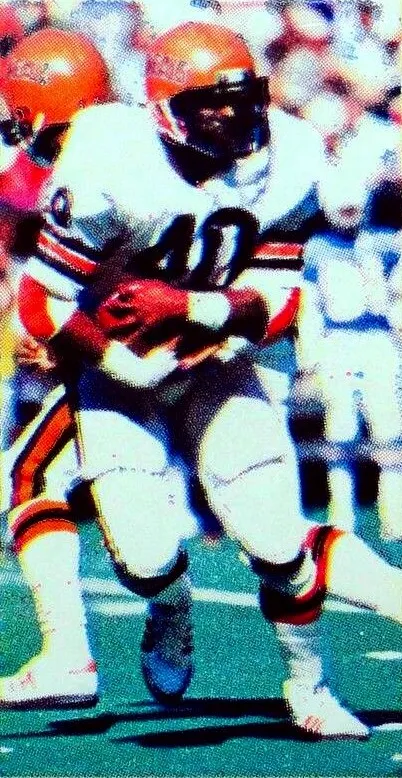
Photo: Steve Shook from Moscow, Idaho, USA, CC BY 2.0, via Wikimedia Commons
Let's be direct about something: the sports media of the 1980s was not a level playing field. Coverage was concentrated in major markets. Narrative trumped nuance. And players who generated complicated stories — or who played in cities that weren't New York, Chicago, or Los Angeles — often got a fraction of the ink and airtime their actual performance warranted.
Chuck Muncie got a fraction of a fraction.
This isn't a grievance post. It's a reckoning. And it's long overdue.
The Landscape That Shaped the Coverage
To understand what happened to Muncie in the press, you have to understand what the American sports media ecosystem looked like in 1980. There was no ESPN as we know it today — the network launched in 1979 and spent its early years still figuring out what it was. Sports Illustrated was the gold standard for long-form coverage, but its column inches were finite and fiercely competed for. Local newspapers carried enormous weight, which meant that players in San Diego and New Orleans were always fighting an uphill battle for national attention compared to players in the NFC East or in New York.
Muncie spent his prime years in New Orleans and San Diego. Both are wonderful cities. Neither was a media powerhouse in 1981.
When he rushed for over a thousand yards and scored a stunning 19 touchdowns in the 1981 season with the Chargers — a performance that would generate wall-to-wall coverage in today's media environment — the national press treated it as a footnote to larger storylines happening elsewhere in the league. The AFC West was busy. The Chargers had other marquee names. And Muncie, despite producing numbers that should have made him the center of every conversation about the position, kept getting pushed to the margins.
The Narrative Trap
Here's where the media criticism gets a little uncomfortable, because it requires acknowledging something the sports press of that era was rarely willing to examine about itself: the stories they chose to tell about Black athletes in the NFL were often filtered through a narrow and frequently unfair lens.
Muncie was a physically dominant, explosively gifted running back who played with a style that demanded attention. But the coverage he did receive frequently leaned on language and framing that emphasized raw athleticism while underplaying the intelligence, work ethic, and technical sophistication that actually defined his game. The contrast with how certain white quarterbacks and coaches were written about in the same publications is stark when you go back and read the archives.
This wasn't unique to Muncie — it was a systemic issue across 1980s sports journalism. But it's worth naming specifically in his case, because the cumulative effect of that framing helped determine which players got celebrated as generational talents and which ones got quietly filed under "good player" and moved past.
When Personal Struggles Became the Whole Story
Muncie dealt with personal challenges during his career, and the press covered those challenges. That's legitimate journalism. What's not legitimate is when a player's off-field difficulties become the organizing principle of every article written about him — when every performance gets contextualized through that lens, when the numbers stop being treated as the primary story.
For a stretch of Muncie's career, that's exactly what happened. Reporters who should have been writing about one of the most productive running backs in the league were instead writing about everything except the football. The result was a coverage record that, when you read it today, feels jarringly incomplete. You could scan dozens of articles from his peak years and come away with almost no sense of what he was actually doing on the field week to week.
That's a failure of journalism. Full stop.
The Peers Who Got the Spotlight
Consider the contemporaries who received significantly more sustained national coverage during overlapping periods of Muncie's career. Walter Payton, absolutely — Payton's coverage was deserved and then some. Tony Dorsett, Marcus Allen, Eric Dickerson as the decade went on. All legitimate stars. All players whose statistics and careers warranted serious attention.
But look at the per-carry efficiency numbers, the touchdown rates, the performance in big games. Muncie holds up against that company in ways the coverage of the era simply never reflected. When Dickerson was breaking records in 1984, the conversation naturally centered on him — but the historical framing that developed around that moment often positioned Muncie as a player who had already faded from relevance, when the reality of his contributions was considerably more complicated.
The press built a hierarchy of the position in the 1980s, and Muncie got placed several rungs below where his actual performance put him. That hierarchy calcified. Casual fans absorbed it. And it became the received wisdom that a generation of football followers grew up with.
How Modern Fans Are Fixing It
The good news — and there genuinely is good news here — is that the internet broke the monopoly that a handful of publications and broadcast outlets held on the historical narrative. Sites like this one exist because fans with access to archival game footage, statistical databases, and a genuine passion for the players who got shortchanged can now build the record that the mainstream press never did.
The conversations happening in football history communities online, the YouTube channels dedicated to tracking down old game film, the statistical deep dives that contextualize 1981 performance against modern benchmarks — all of it is doing corrective work that the original coverage never bothered to do.
Chuck Muncie is being rediscovered by a generation of fans who approach football history like researchers rather than passive consumers of the narrative they were handed. And what they're finding, consistently, is a player who was better than they were ever told.
The Verdict
The 1980s sports press failed Chuck Muncie. It failed him through market bias, through narrative laziness, through framing choices that flattened a complex and gifted athlete into a supporting character in other people's stories.
But legacies aren't fixed things. They get revised when people care enough to do the work. That's what Chuck Muncie Forever is about — not nostalgia for its own sake, but the active, ongoing project of making sure this man's actual story gets told.
The record is being corrected. And it's about time.