Old School, New Tricks: Why Today's NFL Backs Are Rewinding Chuck Muncie's Tape
Photo: Atlanta Falcons, CC BY-SA 3.0, via Wikimedia Commons
There's a moment in a 1981 game film — grainy, washed-out, the kind of footage that looks like it was shot through a dirty window — where Chuck Muncie takes a handoff, reads a linebacker three steps before the linebacker even commits, and cuts to daylight so cleanly it looks choreographed. If you showed that clip to a rookie running back today without telling him who it was, he'd probably assume it was someone from a recent playoff run. That's the thing about great football instincts. They don't age.
And right now, in 2024, more NFL coaches and backs than you might expect are pulling up exactly that kind of footage.
Film Doesn't Lie, and Neither Does Muncie's Legacy
We talk a lot on this site about Chuck Muncie the person — his charisma, his community impact, the way he carried himself in every city he played in. But there's a separate conversation happening inside NFL facilities that doesn't always make it to the fan blogs or the sports talk shows. It's a technical conversation, one happening between position coaches and their backs, often with a tablet or a projector screen involved.
Running backs coaches at multiple levels of the game have quietly pointed to Muncie's film as a masterclass in what's sometimes called "pre-snap processing" — the ability to read defensive alignment before the ball is snapped and already begin calculating where the play is likely to break down or open up. It sounds simple. It is not simple. Most backs at the professional level spend years developing it. Muncie seemed to arrive with it hardwired.
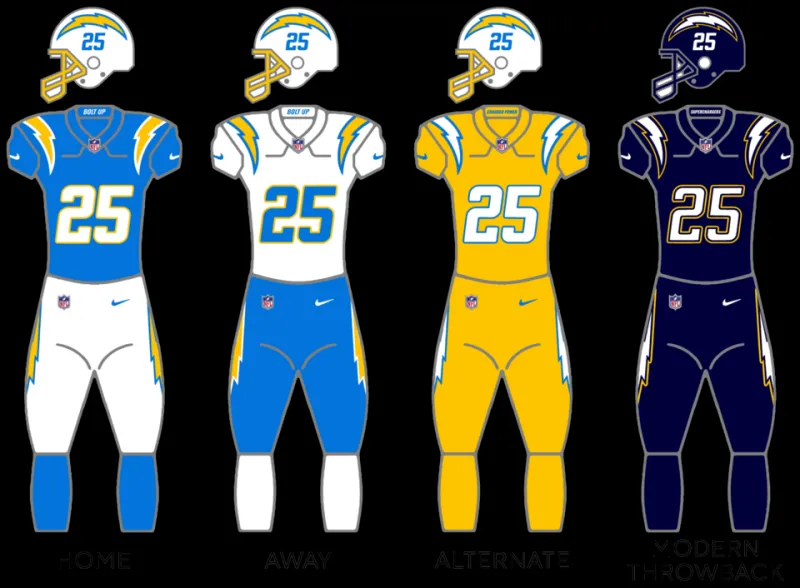
His time with the San Diego Chargers in the early '80s is particularly instructive. Playing in Don Coryell's Air Coryell offense, Muncie wasn't just a bruiser between the tackles — he was a chess piece in a system that demanded football IQ as much as raw athleticism. He had to understand route combinations, defensive rotations, and how a safety's pre-snap alignment might signal a coverage shell that would affect his own running lanes. That's not typical running back stuff. That's quarterback-level awareness applied from the backfield.
What Modern Backs Are Actually Looking At
So what specifically draws today's players to the tape? A few things keep coming up.
Contact balance. Muncie was listed at 6-foot-3, 227 pounds, which was a legitimately imposing frame for a running back in his era. But his ability to absorb contact without going down — to keep his legs churning through arm tackles, to stay square through the hole — is something coaches still point to as textbook technique. In an era where defensive schemes are increasingly built around swarm tackling and gang pursuit, that contact balance is more valuable than ever.
The hesitation step. Watch Muncie on inside runs and you'll notice a subtle, almost imperceptible pause at the line of scrimmage — not a full stop, more like a rhythm adjustment — that consistently froze linebackers for just long enough to create a crease. It's a technique that gets taught today under various names, but Muncie was doing it instinctively before most coaches had language for it.
Patience in space. This one surprises people. You'd think a big back would just lower his shoulder and go. Muncie, especially in the open field, showed an almost counterintuitive willingness to wait — to let blocks develop, to let defenders over-commit — before accelerating. It's the kind of patience that's genuinely hard to coach, and seeing it executed at a high level on film gives young backs a visual reference point that drills and diagrams just can't replicate.
The Coaches Who Keep Coming Back to the Tape
Without naming names (because frankly, NFL coaches don't love going on record about their film room habits), there's a real pattern here that people close to the league have been willing to discuss in general terms. Running backs coaches at both the college and pro level have increasingly expanded their film libraries beyond the obvious legends — your Emmitt Smiths, your Barry Sanders clips that everyone's already seen a thousand times — and started digging into backs from the late '70s and early '80s who played in more complex offensive systems.
Muncie fits that profile perfectly. He played in schemes that required genuine football intelligence. He faced defenses that were themselves evolving rapidly during that era. And he succeeded not just through physical dominance but through processing speed and decision-making. That's a combination that translates across decades.
There's also something to be said for the novelty factor. When a position coach shows a young back the same Emmitt Smith highlight for the fifteenth time, the player's eyes glaze over a little. Pull up a Chuck Muncie clip from 1981 that the kid has never seen? Now you've got his full attention. The techniques land differently when the footage feels fresh.
Why This Matters Beyond the Film Room
For those of us who've been following Chuck Muncie's story for years, there's something genuinely moving about this. The man dealt with more than his share of adversity during and after his playing career. His talent was sometimes overshadowed by off-field storylines that the press of his era was all too eager to amplify. The idea that his football mind — the actual craft he spent years developing — is still being studied and applied in 2024 feels like a form of justice.
His legacy isn't just about the stats (though the stats are excellent — we've covered that ground before on this site). It's not just about the communities he touched or the teammates who still talk about him with reverence. Part of his legacy lives in the mechanics. In the hesitation step. In the patience before the burst. In the pre-snap read that a twenty-three-year-old running back in an NFL training facility is watching right now, trying to absorb, trying to make his own.
That's a pretty remarkable kind of immortality.
The Takeaway
Chuck Muncie played his last NFL game over forty years ago. The league has changed enormously since then — the athletes are bigger and faster, the schemes are more complex, the analytics have reshaped how teams evaluate everything. And yet, there are coaches and players in 2024 who consider his game film essential study material.
That doesn't happen by accident. It happens because the fundamentals Muncie demonstrated — vision, patience, contact balance, football IQ — aren't era-specific. They're just good football. Always have been, always will be.
If you haven't gone back and watched some of his Chargers-era tape recently, do yourself a favor. You'll see what all the fuss is about.