The Class of '76: Why Chuck Muncie's Draft Year Rewired How the NFL Thought About Running Backs
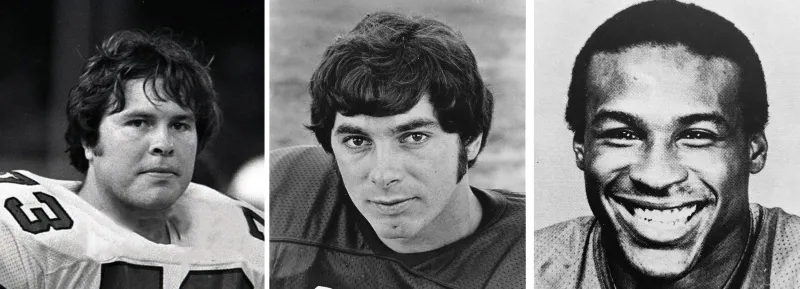
Photo: 1976 NFL draft day vintage football players, via thebigredzone.com
There are draft classes that produce good players, and then there are draft classes that shift the entire conversation. The 1976 NFL Draft was the latter — and right at the center of that seismic shift stood Chuck Muncie, a 6-foot-3, 227-pound running back out of Cal who made scouts scramble for new vocabulary.
For years, NFL evaluators had operated on a fairly tidy mental checklist for running backs. You wanted speed, sure. Toughness, absolutely. But the unspoken rule was that bigger backs were bruisers and smaller backs were burners — rarely did the two overlap in any meaningful way. Chuck Muncie showed up to challenge every single one of those assumptions before he'd even played a regular season snap.
What Made 1976 So Different
The '76 draft class at running back was genuinely stacked. Ricky Bell out of USC was generating enormous pre-draft buzz, widely considered one of the most physically gifted prospects of his era. Mike Pruitt was another name being tossed around in scouting circles. The field was competitive, and the conversation around running back talent was already heating up heading into draft weekend.
But Muncie — selected by the New Orleans Saints with the third overall pick — represented something different from most of the backs in that group. He wasn't just big. He wasn't just fast. He was both, simultaneously, in a way that hadn't really been seen at the position before. He could absorb a linebacker hit over the middle and keep churning, but he could also take a swing pass to the outside and make a cornerback miss in the open field. NFL coaches in 1976 weren't really scheming for a back like that, because they'd never had to.
The Saints, for their part, recognized what they were getting — even if the rest of the league took a few years to fully catch on.
Challenging the Conventional Playbook
Here's the thing about coaching philosophies in the mid-1970s: they were deeply entrenched. Offensive coordinators had their systems, and those systems were built around specific archetypes. You had your fullback who punished defenders between the tackles, and your halfback who provided the speed element on outside runs and screen passes. The idea of one player doing both jobs — and doing them at an elite level — was more theoretical than practical in most NFL playbooks.
Muncie's rookie season forced some of those coaches to start erasing lines they'd drawn years earlier. When you have a back who can run a sweep AND break a tackle in a phone booth, you start asking different questions about how to deploy him. Some coaches adapted quickly; others were slower to adjust. But the fact that the conversation was happening at all was a direct result of Muncie's presence on the field.
Scouts, too, were recalibrating. The combine-era evaluation tools that existed in 1976 weren't nearly as sophisticated as what teams use today, but the human evaluators in the room were sharp enough to recognize that traditional metrics weren't capturing everything Muncie brought to the table. Weight and forty-yard dash times told part of the story. The full picture required watching him move — really watching him — and understanding that the combination of size, athleticism, and instincts he possessed was something genuinely rare.
The Rookie Season That Started a New Standard
Muncie's first year in the league wasn't just promising — it was a statement. He stepped into the Saints' backfield and immediately demonstrated that his college production wasn't a fluke built on inferior competition. He ran hard, he ran smart, and he showed a feel for the game that typically takes young backs a couple of seasons to develop.
What struck people who watched closely wasn't just the highlights, though those were plenty impressive. It was the consistency. Game to game, the Saints had a back who could be featured in multiple facets of the offense without becoming predictable. That kind of versatility was genuinely new, and it started planting seeds in the minds of coaches and personnel guys around the league.
By the time Muncie's career was in full stride, the template he helped establish was already influencing how teams were drafting and developing running backs. The idea of a "complete back" — one who could handle inside runs, outside runs, pass protection, and receiving duties — became increasingly central to how NFL offenses were built. You can trace a meaningful part of that evolution back to what Muncie showed people starting in 1976.
A Legacy Rooted in That First Spring
It's worth pausing on what it means to enter a league and immediately challenge its assumptions. Most rookies are trying to survive, trying to prove they belong. Muncie did that, but he also did something more — he made people in the building rethink what "belonging" even looked like at his position.
The 1976 draft class produced a lot of talented football players. But in terms of lasting influence on how the NFL evaluated and utilized running back talent, Chuck Muncie's entry into the league stands out. He didn't just meet the existing standard. He raised it, then redrew it entirely.
For fans of Chuck Muncie — and there are plenty of us here at Chuck Muncie Forever — that draft spring feels like the beginning of something bigger than any single player's career. It was the moment the league's understanding of what a running back could be started to expand. And Chuck Muncie was the reason why.