Still Standing: The Season Chuck Muncie Silenced Every Last Critic
Photo: Keith Allison, CC BY-SA 2.0, via Wikimedia Commons
There's a certain kind of noise that surrounds an aging athlete — not the roar of the crowd, but the low, persistent hum of doubt. By the time the 1984 NFL season rolled around, that hum had grown pretty loud around Chuck Muncie. Injuries had chipped away at his body. Younger backs were getting the hype. And more than a few voices around the league were suggesting it might be time for him to hang it up.
They were wrong. And Chuck made sure they knew it.
The Weight of Expectation — and the Weight of Wear
Let's be honest about what Muncie was dealing with heading into that stretch of his career. Running back is arguably the most physically punishing position in professional football. Every carry is a negotiation between your body and the laws of physics, and after years of absorbing hits from some of the biggest, fastest defenders in the world, the toll adds up fast. Knees get cranky. Hips tighten. Recovery time stretches from days into weeks.
For Muncie, the challenge wasn't just physical. It was psychological. When the sports press starts treating you like a cautionary tale rather than a competitor, you have two choices: believe them or prove them wrong. Chuck had never been the kind of man to sit quietly while someone else wrote his story.
What separated him in those critical months wasn't just raw talent — plenty of guys have talent. It was the discipline he brought to rebuilding himself from the ground up.
The Work Nobody Saw
Here's the thing about comeback stories: the part that actually matters almost never makes the highlight reel. It happens in training facilities before the cameras show up, in film sessions that stretch past midnight, in the quiet grind of rehabilitation when every instinct is telling you to rest.
Muncie approached his conditioning with a seriousness that impressed even the people around him who already knew what he was capable of. He refined his diet, leaned into recovery protocols that weren't yet mainstream in early-80s pro football, and worked obsessively on the specific movement patterns that had been compromised by injury. He wasn't just trying to get back to where he'd been — he was trying to get smarter about how he used what he had.
There's a real intelligence to how elite running backs manage their careers, and Muncie had it. He understood leverage, angles, and how to make a defense commit before he made his cut. As pure top-end speed becomes harder to maintain with age, football IQ becomes the great equalizer — and Chuck had that in abundance.
When the Doubters Had to Reckon With the Film
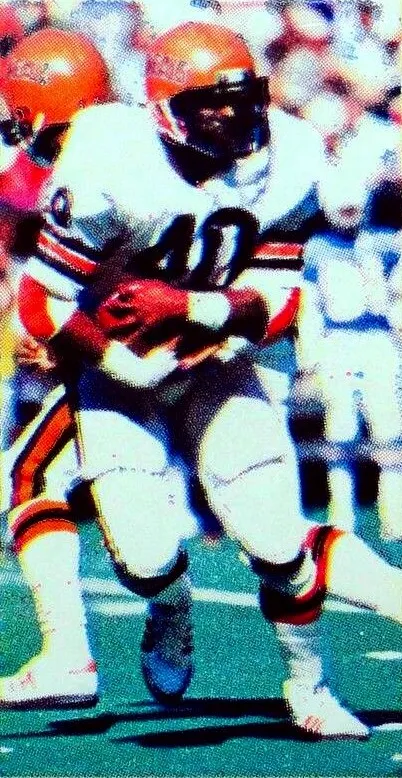
When Muncie stepped back onto the field with something to prove, it showed. Not in a desperate, look-at-me way, but in the quiet authority of a man who knew exactly what he was doing out there. Blocks that might have knocked him sideways in a rougher stretch of his career? He found ways around them. Gaps that closed faster than they used to? He read them earlier.
The production spoke for itself. And for anyone paying attention — really paying attention, not just glancing at a box score — it was clear that this wasn't a player running on fumes. This was a player who had adapted, evolved, and come out the other side of a hard stretch with his competitive fire completely intact.
Coaches and teammates noticed. So did the defenders who had maybe expected an easier assignment.
What Resilience Actually Looks Like in the NFL
We throw the word "resilience" around a lot in sports, sometimes so casually it loses its meaning. But what Chuck Muncie demonstrated during this period of his career was the real thing — not the inspirational-poster version, but the gritty, unglamorous, day-after-day version that most people never see and rarely appreciate.
He didn't give interviews about his comeback while it was happening. He didn't need to. The work was the statement.
There's a reason stories like this resonate so deeply with football fans, especially here in the US where we tend to mythologize the underdog narrative. But Muncie's story isn't really an underdog story — he was never truly out. He was just momentarily underestimated. And that's a different thing entirely. Underdogs surprise you. Chuck Muncie reminded you of something you should never have forgotten.
The Bigger Lesson
Look, every great athlete faces a moment when the world starts to move on before they're ready. Some accept it gracefully. Some fight it bitterly. And a rare few — the ones we end up writing about decades later — channel it into something extraordinary.
Chuck Muncie falls into that last category. His ability to recalibrate, to reassess, and to come back with a sharpened sense of purpose is part of what makes his career so worth revisiting. It's not just the touchdowns and the yardage totals and the Pro Bowl selections, as impressive as all of that is. It's the full arc — including the parts where things got hard and he pushed through anyway.
For everyone who wrote him off in those uncertain months, the 1984 season was a direct and unmistakable answer. And for those of us at Chuck Muncie Forever who have spent time really digging into what made this man such a special player, that chapter of his story is one of the most compelling of all.
Some athletes fade. Chuck Muncie chose a different path — and the record shows exactly how that turned out.